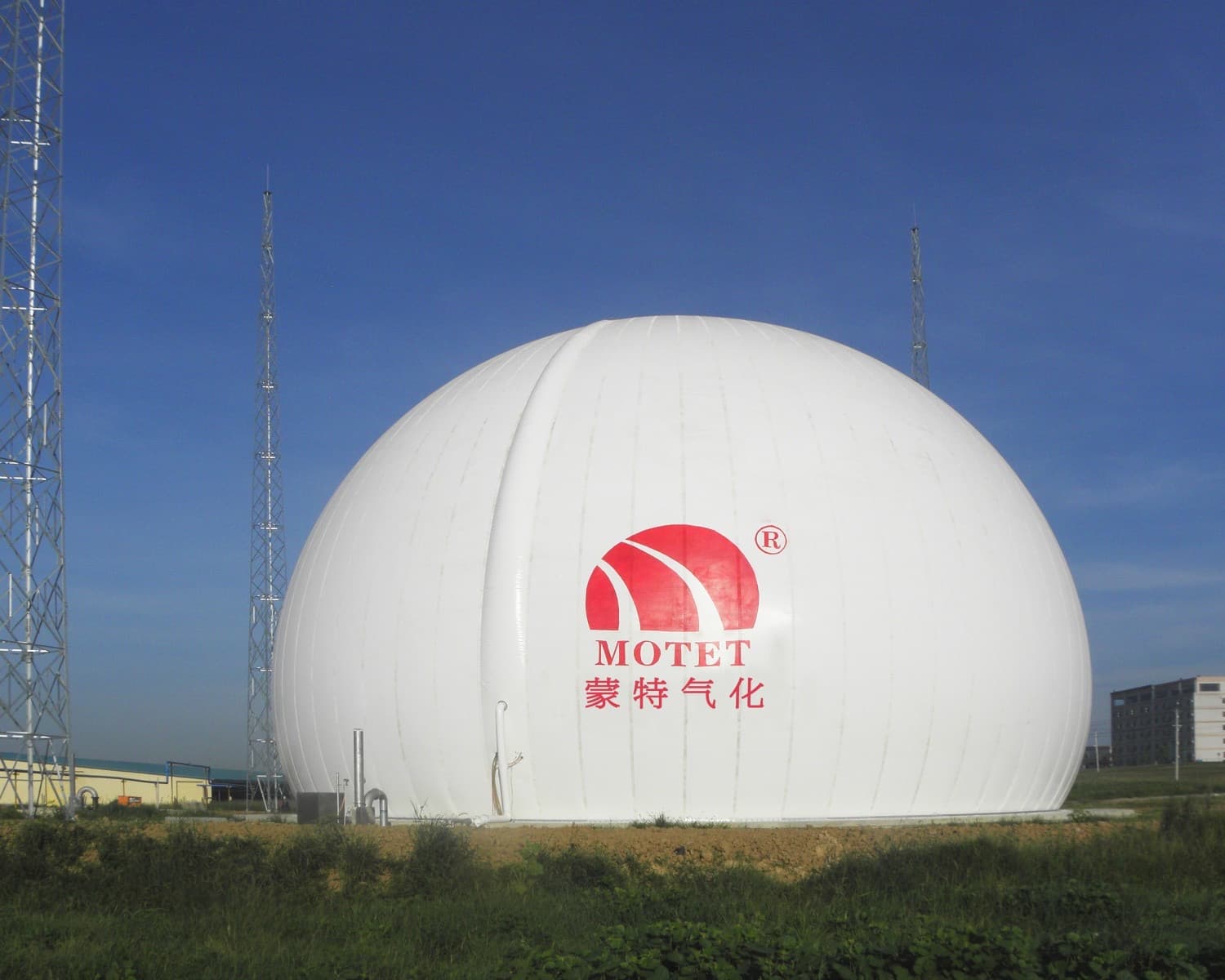
What is a gas holder?
A gas holder—historically also called a gasometer—is equipment that temporarily stores gas and balances gas supply against demand. Its purpose is not indefinite storage; it provides a controlled buffer when generation and consumption do not match.
In a biogas plant, anaerobic digestion may produce gas continuously while boilers, engines, upgrading equipment or flares consume gas at changing rates. Without suitable buffer volume, pressure, flow and downstream operation are more likely to fluctuate.
A gas holder is not automatically a high-pressure gas vessel. The wet, conventional dry-seal piston and double-membrane holders discussed here are variable-volume systems. Project pressure, materials and safety requirements must follow approved documents and local rules.
Buffer
Absorbs short-term differences between gas production and consumption.
Pressure stability
Helps maintain usable supply conditions within the designed operating range.
Dispatch
Provides operating margin when boilers, engines, upgrading units or flares change state.
Visibility
Combines level, pressure and control signals so operators can understand storage condition.
Clarifying the terminology: wet, conventional dry and membrane
“Dry” has a historical engineering meaning. A conventional dry-seal gasholder normally contains a vertically moving piston and a circumferential seal inside a steel shell. A modern double-membrane holder also avoids a water seal, but its structure, load path and controls are different. Treating them as three separate families prevents specification errors.
Wet / water-sealed
Water tank plus bell or telescopic lifts
Water forms the moving seal
Conventional dry-seal piston
Fixed steel shell plus internal piston
Flexible dry, oil or grease-assisted seal
Flexible membrane / double membrane
Inner gas membrane, outer membrane and support air
Membrane and perimeter clamping seal
Wet gas holders: water as the moving seal
A wet holder normally contains a water tank. A bell or telescopic lift rises as gas enters and descends as gas leaves. The water seal limits gas leakage around the moving perimeter.
The principle is easy to observe and historically served town-gas and industrial systems. It also creates continuing duties: water level and quality, corrosion, freezing, wastewater handling and the condition of guides and moving steelwork. Seal-water integrity is an operating requirement, not a cosmetic detail.
Characteristics
- Operating principle and stored-volume movement are visually direct.
- Dead weight can provide relatively stable low-pressure delivery within its design range.
Maintenance boundaries
- Seal-water level and condition need control.
- Corrosion, freezing and guide maintenance cannot be ignored.
- Plot, foundation and long-term maintenance demands are often substantial.
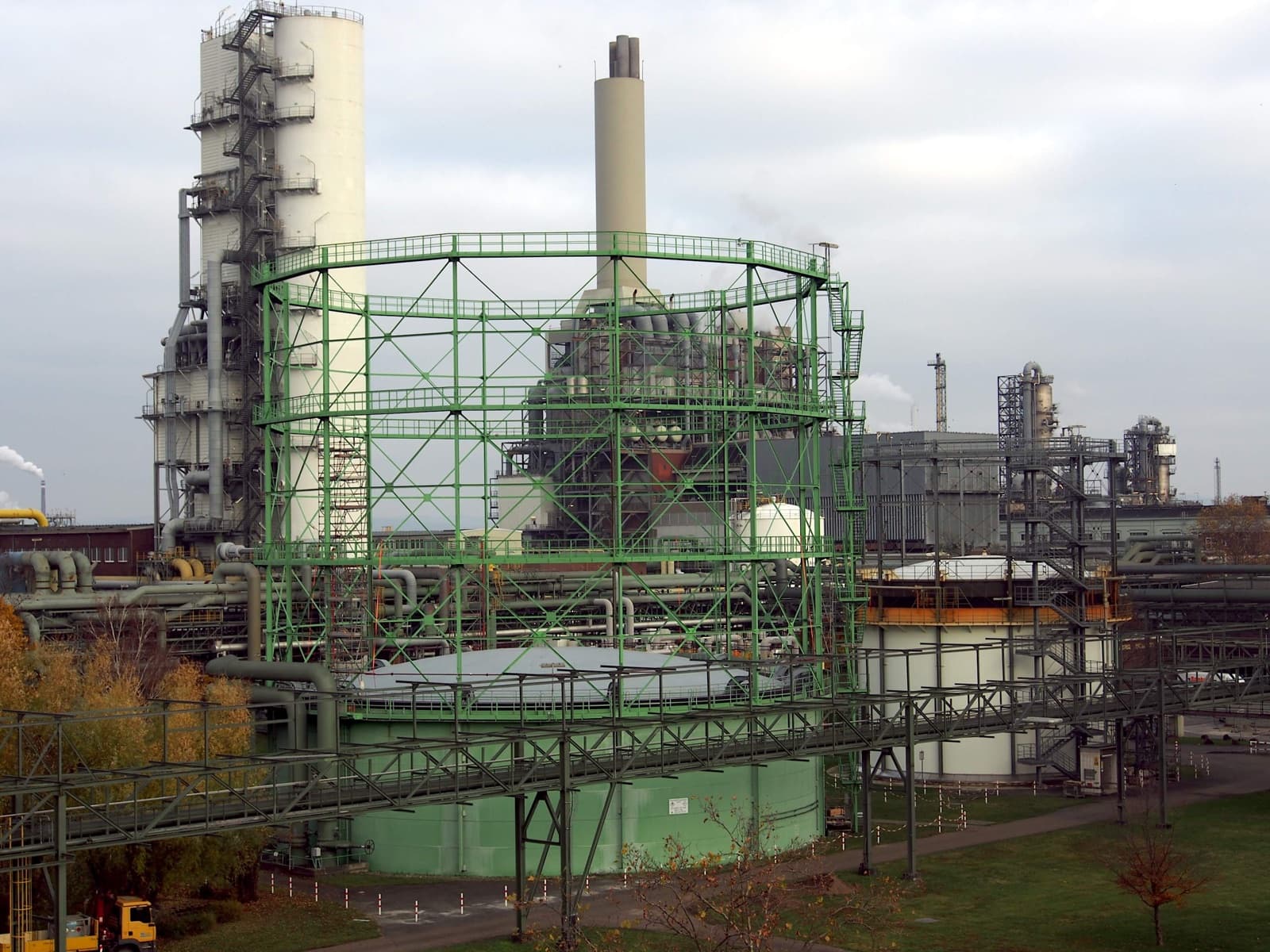
Traditional dry holders: a moving piston inside a fixed shell
A conventional dry holder does not rely on a water tank. Gas entering a fixed steel shell raises an internal piston; a circumferential sealing system maintains gas tightness between the piston and shell. Piston weight and counterweight design contribute to operating pressure.
Dry-holder designs may use flexible curtain seals, oil seals or grease-assisted systems. The external appearance does not reveal every internal detail. Maintenance commonly addresses piston level, guides, seals, sealing or lubricating media, corrosion and instrumentation.
Characteristics
- No seal-water tank and no associated water-level or freezing issue.
- Can suit certain large-volume industrial gas-buffering duties.
Maintenance boundaries
- Steel shell, piston, guides and seals form a complex mechanical system.
- Piston tilt, seal wear and internal inspection require specialist procedures.
- Capital, outage and life-cycle cost must be assessed at project scale.
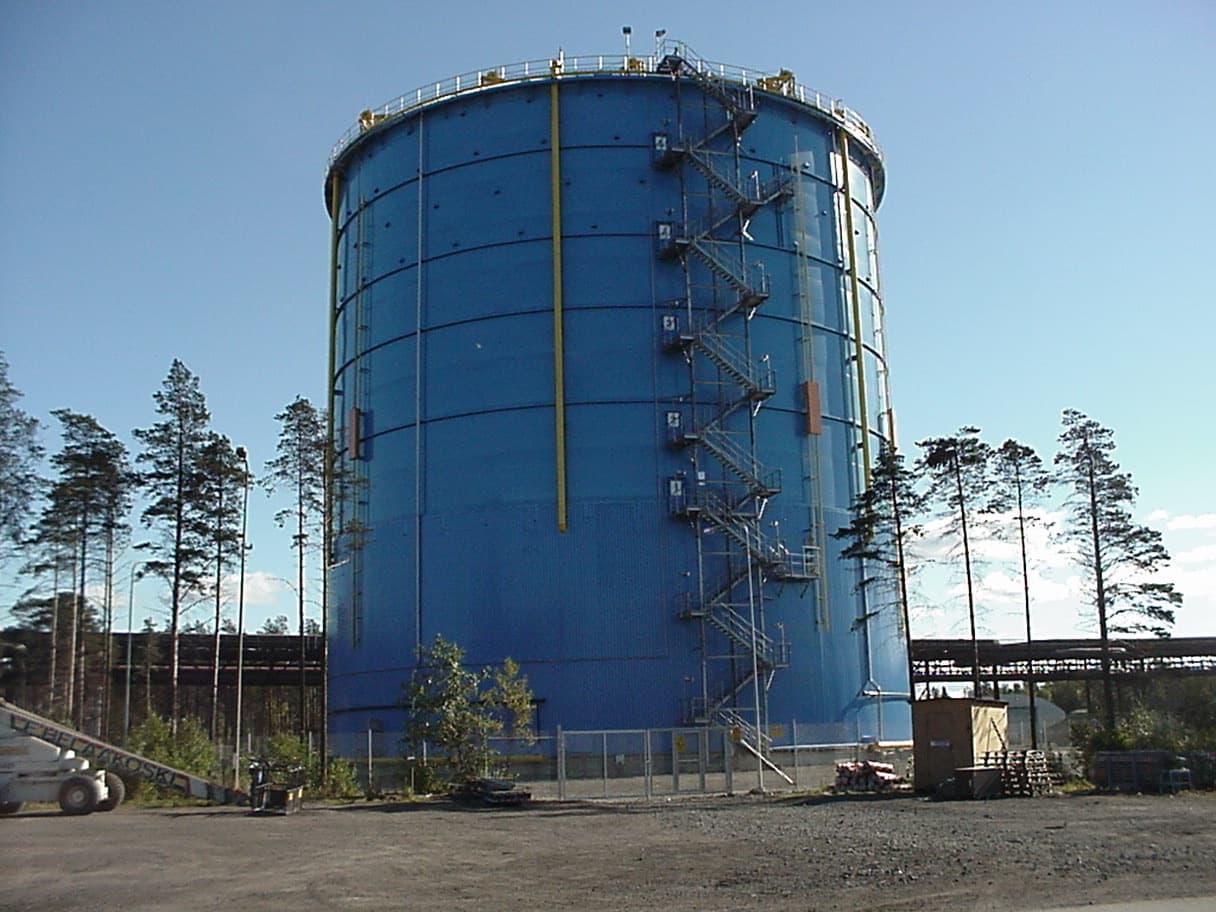
What is the difference between wet and dry gas holders?
The fundamental difference is the moving sealing method and the structure required to support it. This table is a general engineering overview, not a replacement for manufacturer drawings or project calculations.
| Comparison | Wet holder | Traditional dry piston holder | Modern double-membrane holder |
|---|---|---|---|
| Primary seal medium | Water seal | Dry flexible, oil or grease seal | Inner membrane and perimeter clamping seal |
| Part that moves with volume | Bell / telescopic lifts | Internal piston | Flexible inner membrane |
| External structure | Water tank and guide frame | Fixed steel shell | Inflated outer membrane or tank-top supporting structure |
| Seal-water system | Required | Normally not required | Not required |
| Maintenance focus | Water, corrosion, freezing, guides | Piston level, guides, seals, corrosion | Membranes, clamps, blower, instruments and interlocks |
| Typical emphasis | Long-term water and steelwork maintenance | Large mechanical structure and internal inspection | Low-pressure buffering, modular configuration and project fit |
Why are modern double-membrane holders common in biogas projects?
A double-membrane holder uses an inner membrane as the variable-volume gas chamber, an outer membrane as the protective enclosure, and support air between them as part of shape and pressure control. It has neither the water seal of a wet holder nor the large piston of a conventional dry holder.
For wastewater, food-waste, agricultural digestion and industrial organic-wastewater plants, the system can be tailored to usable volume, pressure, gas composition, layout and climate. Tank-top systems use space above a digester; floor-standing systems provide a more independent storage unit.
Lower structural mass does not remove the need for engineering. Chemical compatibility, wind and snow, anchoring, gas-tight interfaces, blower redundancy, pressure and level measurement, alarms, interlocks and service access all need definition.
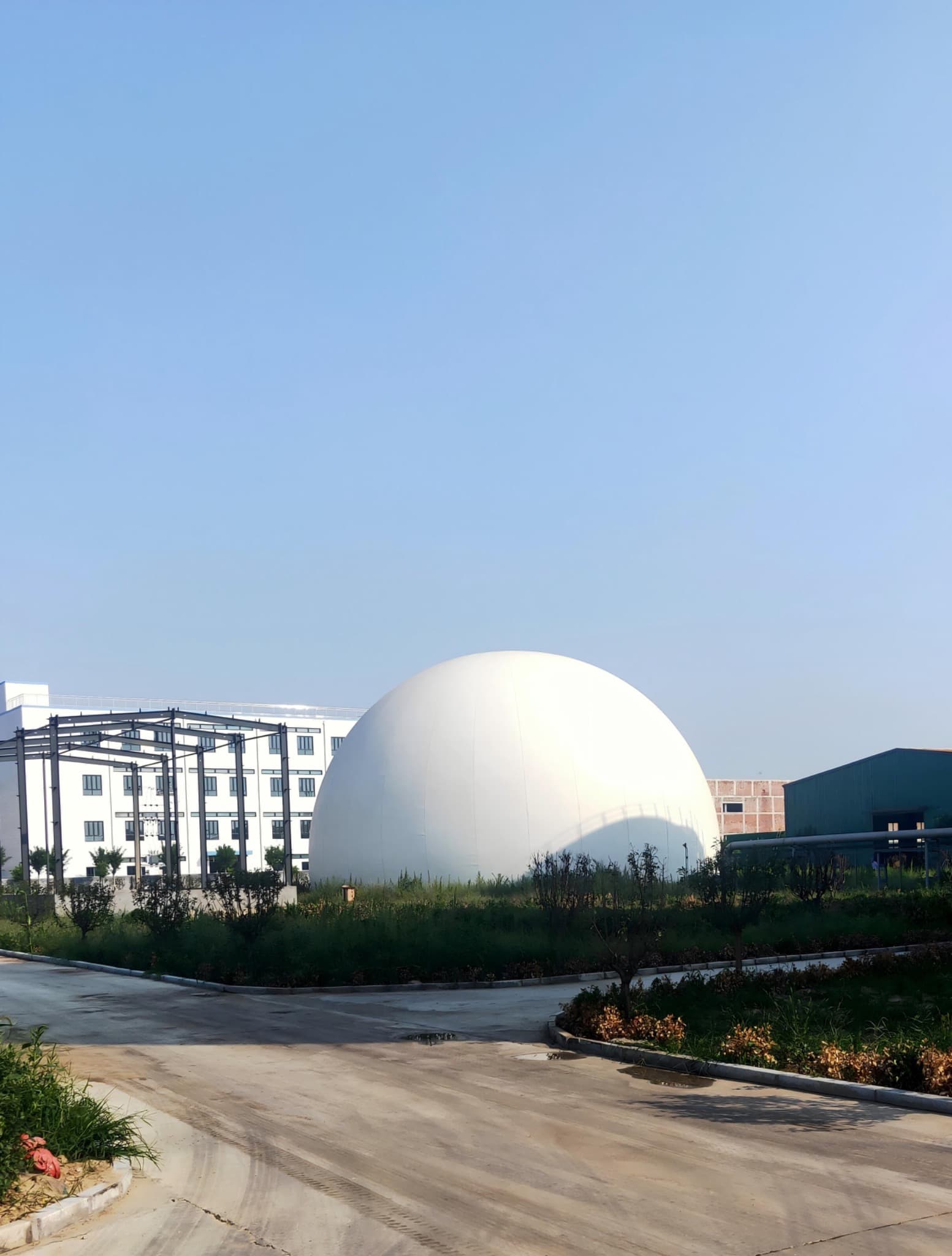
How should a gas holder be selected?
Define the duty before discussing a model or price. A responsible preliminary selection should answer at least these questions:
What is the gas?
Methane, carbon dioxide, hydrogen sulfide, water vapor and trace components affect compatibility and safety.
What usable volume is actually required?
Compare production and consumption over time; average flow alone is not a storage calculation.
How will pressure be controlled?
Define normal, alarm and protection states and the interfaces with blowers, valves, flare and gas consumers.
Where is the project?
Wind, temperature, snow, seismic conditions, altitude, corrosion and local rules affect design.
How will it be installed and maintained?
Confirm foundation, lifting, transport, access, spares and site capability.
Where does the supply boundary end?
Holder, controls, valves, ducts, installation, commissioning, training and acceptance must be explicit.
Price is not one number: value comes from correct configuration and life-cycle service
A responsible gas-holder price cannot be derived from cubic metres alone. Membrane system, pressure, climate loads, steelwork, instruments, blower redundancy, valves, controls, transport, installation and service scope can differ even at the same nominal volume. An apparently low quotation may simply omit an important boundary.
MOTET first reviews the gas, production-consumption profile, site and interfaces, then proposes a configuration matched to the duty. The objective is not to add options indiscriminately; it is to avoid obvious over- or under-specification and make price comparisons technically fair.
After-sales scope should be defined during procurement, not invented after a fault. Subject to the contract, our services can cover drawing and interface review, installation guidance, commissioning, operator training, remote support, spare-parts planning, inspection, retrofit and membrane replacement. Response method, territory and site attendance remain project-specific.
Duty-based customization
Volume, pressure, membrane, interfaces, controls and arrangement follow project conditions.
Comparable pricing
Equipment, freight, installation, commissioning and spares are separated clearly.
Executable delivery
Drawings, site interfaces and commissioning reduce gaps between disciplines.
Life-cycle support
Training, remote support, inspection, spares and membrane replacement can form one service plan.
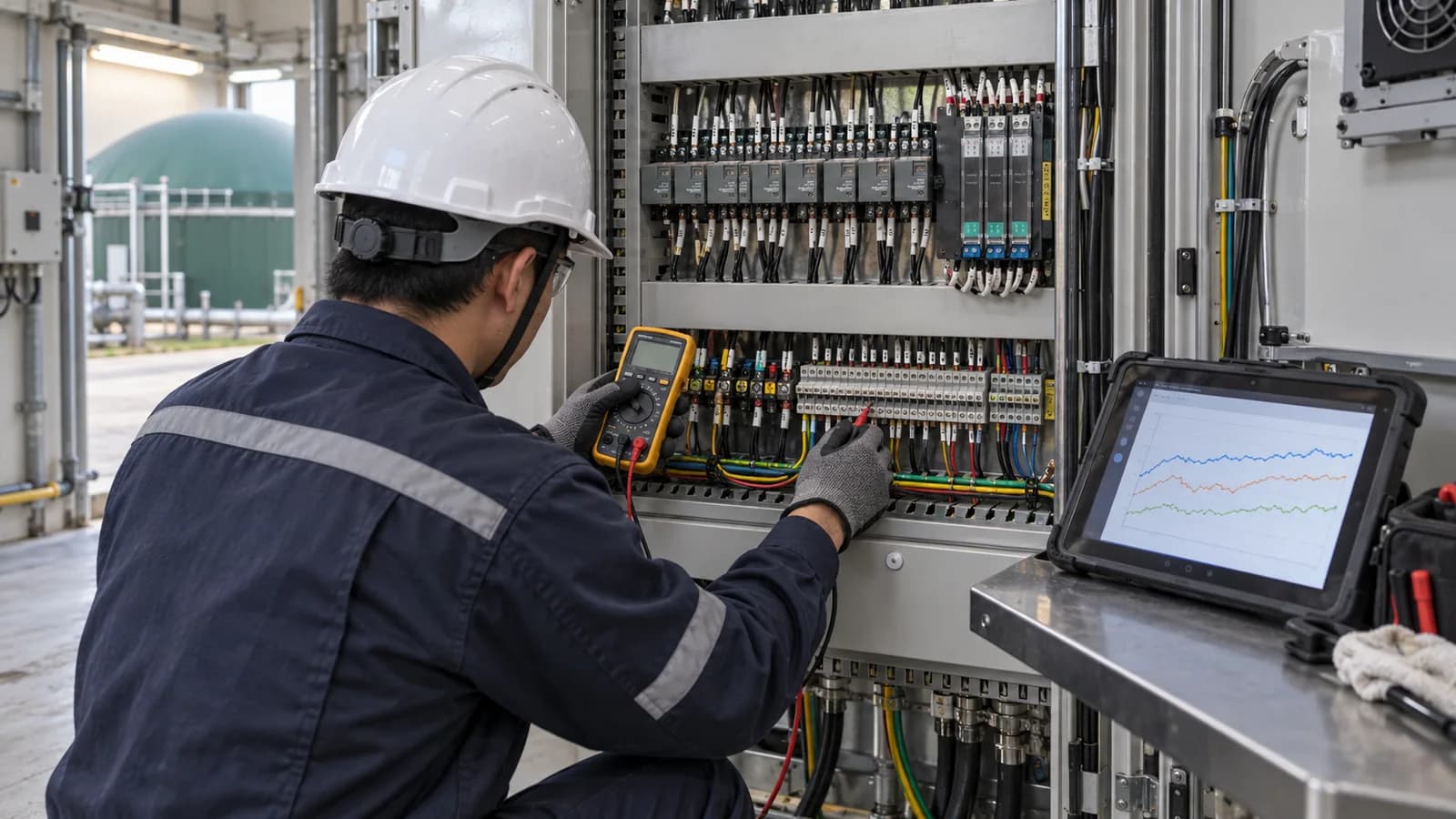
Selection / technical clarification
Share the duty, then compare solutions on the same basis
Send gas composition, production and consumption data, pressure, project location and supply boundary for a preliminary configuration and project-specific quotation.
Frequently Asked Questions
Is a gas holder the same as a high-pressure gas tank?
No. Gas holder is a broad term, but the wet, dry-seal piston and double-membrane systems discussed here are variable-volume storage systems. A double-membrane gas holder normally operates at low pressure and must not be treated as a high-pressure vessel.
What is the main difference between a wet and a dry gas holder?
A wet holder uses water as part of the moving seal. A conventional dry holder avoids a water tank and uses a moving piston with a dry, oil or grease-assisted sealing arrangement, depending on the design.
Is a double-membrane gas holder a dry gas holder?
It is waterless and is sometimes grouped broadly with dry storage, but it is not the same machine as the traditional dry-seal piston holder. Calling it a flexible membrane gas holder is clearer.
Which gas holder type is best for biogas?
There is no universal answer. Gas composition, required usable volume, operating pressure, production and consumption profiles, climate, layout, maintenance capability and local rules must be assessed together.
Why can two gas holders with the same nominal volume have different prices?
Membrane specification, pressure, wind and snow design, steelwork, instruments, blower redundancy, valves, controls, transport, installation and service scope can differ substantially. A meaningful comparison needs a common technical boundary.
What information is needed for a preliminary quotation?
At minimum: gas composition, production and consumption data, required storage strategy, design pressure, preferred configuration, site location, climate data, installation constraints, electrical standard and the required delivery and service scope.
Technical and image sources
- Historic England: Gasworks and Gasholders
- US Patent 2,583,981: Dry-seal pressure type gasholder
- EPA AgSTAR: Biogas System Operator Guidebook
- Uisce Éireann: Standard Specification (including water-sealed holder requirements)
This article is an engineering introduction. It does not replace project calculations, hazardous-area assessment, operating manuals or local regulations.