A good double membrane gas holder—also spelled double membrane gasholder—is more than a well-shaped dome with a smooth finish. Its membranes must perform distinct jobs under the project’s actual loads, gas conditions and climate. For a client, quality means suitable, documented and traceable materials, not simply a premium label or the largest number in a brochure.
Start with the sample, then check the evidence
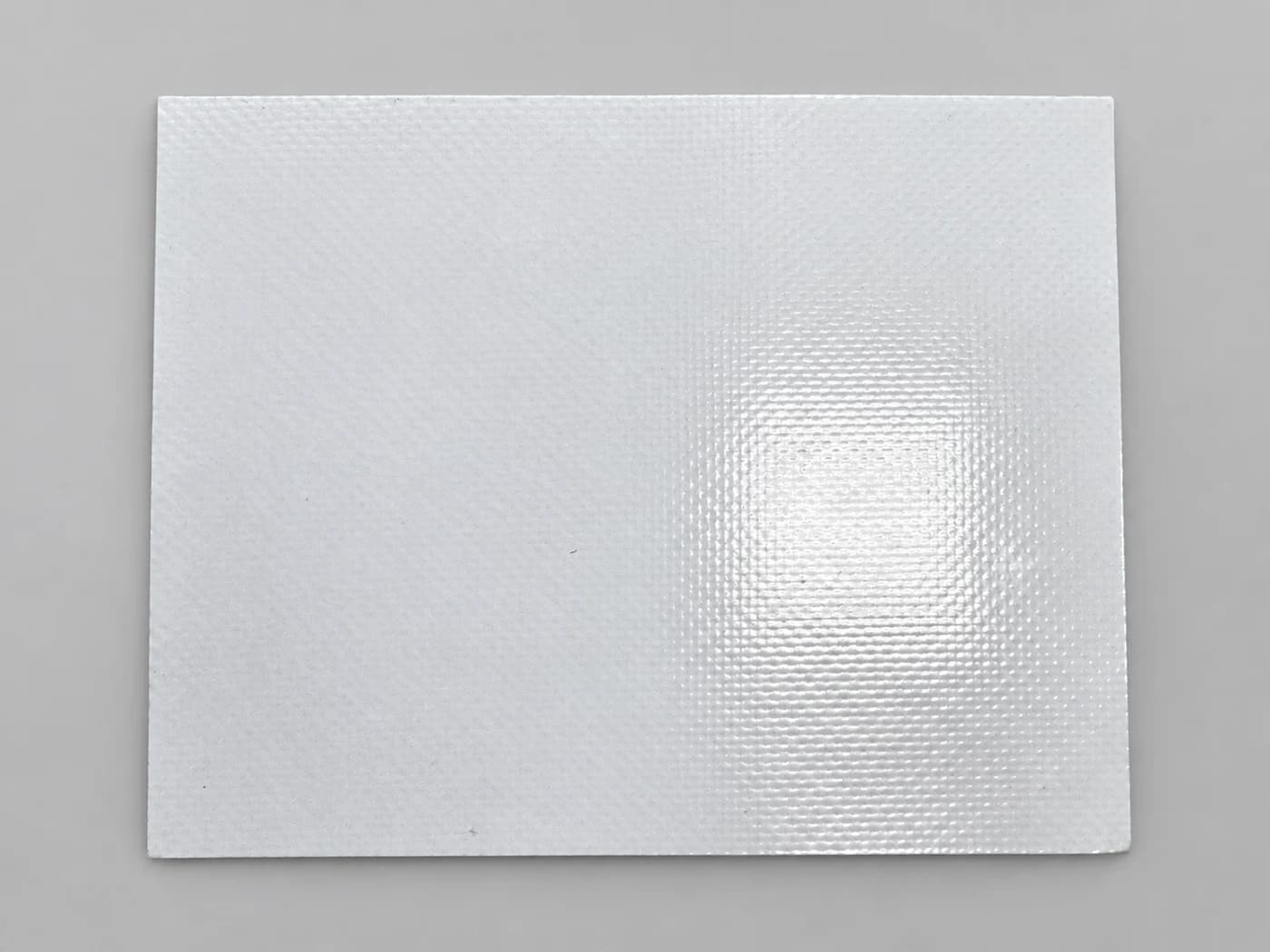
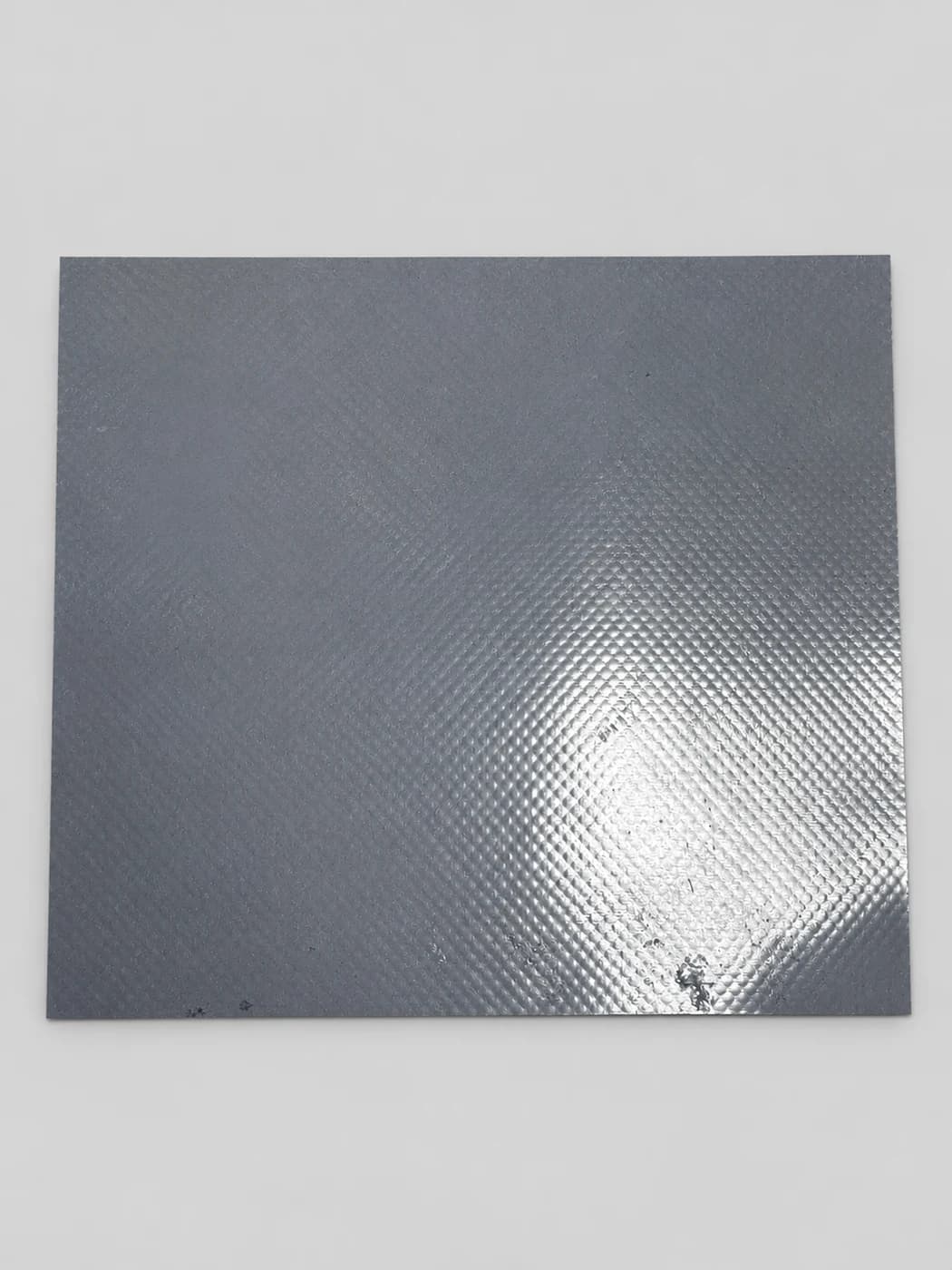
These white and grey physical samples were provided by MOTET. The photographs have been retouched to tidy the backgrounds and remove labels; they illustrate appearance only. Intended use and correspondence to the material options below are unconfirmed. Colour, texture and photographs do not substantiate strength, weathering, fire performance or certification.
Inner, outer and bottom membranes have different jobs
The inner membrane forms part of the gas-retaining envelope and moves as stored volume changes. Relevant properties include gas compatibility, methane permeability, repeated flexing, mechanical strength and fabricated seams. Methane permeability is important, but it also appears in some outer-membrane datasheets: one property cannot identify the intended application.
The outer membrane is the external enclosure. Its specification must address design wind and snow loads, support-air conditions and outdoor exposure, including directional strength, tear resistance, finish, weathering and temperature conditions. Whether a separate bottom membrane is needed, and how it is fixed and exposed, depends on the installation. A wastewater cover is not automatically a suitable bottom membrane.
The examples here use confirmed inner-membrane options A, B and C and outer-membrane option OM-A. They are assessment options, not a fixed bill of materials for every MOTET holder. Approved project documents determine the actual configuration.
Tensile strength: read direction, units and the meaning of the value
Tensile properties describe how a coated-fabric specimen carries load during a tensile test. The supplied sheets express tensile force in N/5 cm for a 5 cm-wide specimen, with separate warp and weft values. This is not an allowable gas-holder pressure or a whole-holder wind rating. ISO 1421 includes strip and grab methods; method, specimen state and conditions matter when comparing results.
Inner option A states ≥5800 / ≥5400 N/5 cm; inner option B states ≥4400 / ≥4200 N/5 cm. The ≥ symbols retain the lower-limit expressions in those sources. Inner option C and outer option OM-A state 8000 / 7500 N/5 cm as source average values. We do not rewrite averages as guaranteed minimums.
A higher number is not automatically a better project fit. Geometry, combined loads, connections, seams, material reduction factors and ageing also matter. Material selection must support the structural assessment and the fabrication process together.
Tear resistance, coating adhesion and seams are separate checks
Tensile and tear properties answer different questions. Tear resistance concerns the propagation of existing cuts or damage and cannot replace a tensile value. Inner option A states ≥900 / ≥800 N and outer OM-A states 1300 / 1300 N, both with DIN 53363 listed. The latter remains a source average, not a newly imposed acceptance limit.
Coating adhesion concerns the bond between coating and base fabric. A finished weld also depends on overlap, temperature, speed, pressure, surface finish and process checks. OM-A’s source calls its 150 N/5 cm entry “Welding adhesion”, but cites ISO 2411, a coating-adhesion method. That terminology needs clarification; the entry must not be treated as a finished-seam acceptance value.
A datasheet starts the quality discussion; it does not finish it. Methods, sampling scope and acceptance criteria for fabricated seams, perimeter clamping and connection seals should be defined separately in project documents.
UV resistance: finish, weathering tests and life expectancy are not the same
Outdoor membranes face sunlight, temperature changes, rain and mechanical loading together. OM-A’s sheet lists a weldable PVDF front finish and an acrylic back finish over PVC coating. This does not make the entire membrane pure PVDF. Surface treatment informs selection, but does not establish a service-life promise.
Light fastness is not the same as resistance to UV-induced mechanical ageing. ISO 105-B02 assesses colour change under artificial light. A stated grade of 7–8 cannot establish retained tensile strength, a fixed outdoor lifespan or permanent resistance to ageing. Weathering evidence needs the light source, exposure cycle, temperature, humidity, duration and assessed property.
Review site climate and solar exposure alongside operating conditions and, where available, post-ageing mechanical and appearance data. The current OM-A sheet provides no independent UV-ageing duration or outdoor-life conclusion. We do not manufacture either figure.
Methane permeability is not a whole-holder leak rate
Permeation describes gas passing through the membrane material itself. System leakage can also arise at seams, perimeter seals, pipe entries and fittings. Inner option B states <131 cm³/(m²·d·bar) at 23 °C. A states <500 and C states ≤200 in the same units, but their sources omit the test temperature.
Do not rank those numbers as if all conditions were identical. Retain the area, time and pressure-normalised units, test gas, temperature and method, then check compatibility with actual gas composition, humidity, condensate and hydrogen sulphide where relevant. Oxygen-permeability data cannot substitute for methane-permeability data.
Material testing does not replace holder leak checks, pressure-control checks or interlock verification under an approved commissioning procedure. Likewise, a listed flex-test count or temperature test does not directly establish whole-holder life or an allowable operating-temperature range.
Fire behaviour: precise evidence is better than “fireproof”
Describe the classification, standard, specimen and supporting document instead of calling a membrane fireproof. DIN 4102-1 B1 is a flame-retardant classification within that standard system; it is not non-combustibility or Japanese non-combustible material approval.
A and OM-A carry B1 supplier declarations. C’s source declares GB 8624 B1 without an edition. B states no fire classification, so we add none. DIN and GB B1 statements are not interchangeable, and a report for another material must not be reassigned to these options.
Material fire behaviour is only one part of project safety. Gas hazards, earthing, pressure protection, electrical equipment, monitoring and site requirements still need a system-level assessment. No material class alone establishes whole-holder fire compliance.
Quality means using each piece of evidence within its scope
The examples below come from MOTET’s compiled membrane technical summary, with the source-value status retained. A, B, C and OM-A are summary references, not proprietary MOTET material models. Dates and conditions differ between sources; this is a reading guide, not a like-for-like performance ranking.
Supplier sheets support selection discussions. Traceable test reports support conclusions about their recorded specimens. Fabrication and holder-acceptance records support the corresponding workmanship and system checks. These evidence levels do not replace one another. Public summaries withhold supplier identity without relabelling supplier documents as MOTET test reports.
On narrow screens, scroll the table horizontally to read all columns.
| Source option | Mass per unit area | Tensile force: warp / weft | Value status |
|---|---|---|---|
| Inner membrane option AIM-A | 1200 g/m² ±5% | ≥5800 / ≥5400 N/5 cm | Source lower limits |
| Inner membrane option BIM-B | 1200 g/m² (-5% / +10%) | ≥4400 / ≥4200 N/5 cm | Source lower limits |
| Inner membrane option CIM-C | Approx. 1500 g/m² | 8000 / 7500 N/5 cm | Source averages |
| Outer membrane optionOM-A | 1400 g/m² | 8000 / 7500 N/5 cm | Source averages |
Units, symbols and values are retained from the technical summary. Missing thickness is not inferred; averages are not promoted to guaranteed minimums. See the technical page for methods, dates and permeability and fire limitations.
Read full membrane data and application notesA useful specification is one the client can verify
For wastewater treatment, anaerobic digestion and other biogas projects, define the storage duty and site boundaries before choosing membranes. Low price should not come from missing conditions, and high tensile force cannot substitute for gas retention, seam quality or system safety.
That is why MOTET takes membrane quality seriously: not to maximise every brochure number, but to put the right material in the right role, explain the evidence and limitations, and keep supply, fabrication and acceptance requirements consistent.
Information for an initial material review
- Gas and duty: composition, flow, humidity, condensate and operating pattern.
- Design boundary: usable volume, pressure, configuration and the membrane’s role.
- Site conditions: location, wind and snow loads, temperature, sunlight and installation constraints.
- Material evidence: direction, units, methods, value status, source date and batch traceability.
- Fabrication and acceptance: seams, perimeter seals, fittings, pressure control and interlocks.
Frequently Asked Questions
Is a thicker or heavier membrane always better?
No. Base fabric, coating, directional tensile and tear properties, gas permeability, surface finish and weldability must be assessed together against design loads, gas composition and site conditions.
Does a methane-permeability value identify an inner membrane?
Not on its own. It is important for inner-membrane selection, but some outer-membrane datasheets also state it. Intended use must be checked against source documentation, construction, design and supply records, not inferred from one property or colour.
Does B1 mean fireproof, non-combustible or whole-holder certified?
No. State the standard, edition, sample and evidence type. DIN 4102-1 B1 and GB 8624 B1 are not interchangeable. A supplier declaration is not an independent test report or a conclusion about whole-holder fire compliance.
Can a sample photograph prove strength or service life?
No. Photographs show appearance only. The two samples in this article have not been matched to particular material options; strength, weathering, fire and permeability claims require corresponding documentation or test evidence.