01
Higher Structural Rigidity
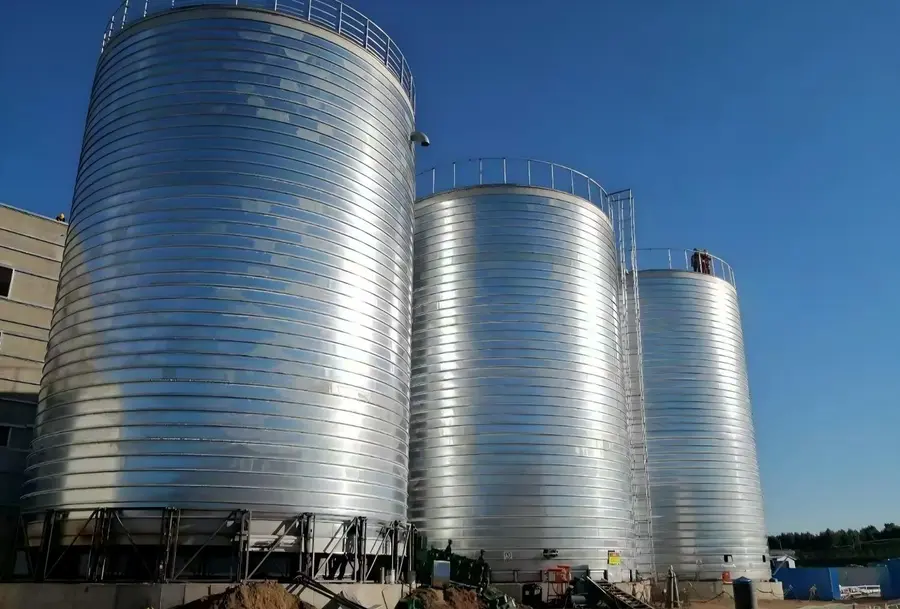
The steel shell resists wind, snow, and external mechanical loading, giving the holder a more stable overall form.
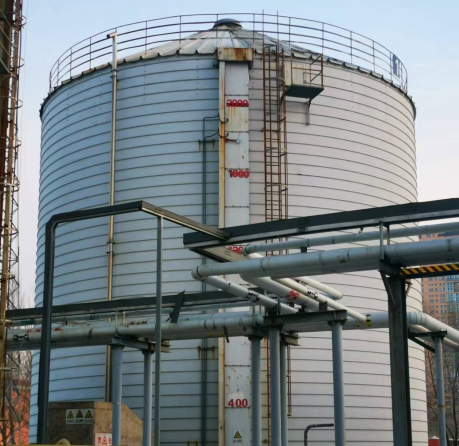
The external-steel internal-membrane holder uses a steel shell for structural loading and an internal membrane for gas-tight separation. It suits projects with stricter demands on appearance, weathering, and design pressure.
Request a project-specific quoteProduct Overview
The external-steel internal-membrane holder uses a steel shell for structural loading and an internal membrane for gas-tight separation. It suits projects with stricter demands on appearance, weathering, and design pressure.
It is often selected for urban projects, industrial parks, and standardized facilities where storage performance must also fit the surrounding built environment.
Comparing gas-holder designs? Understand how wet, conventional dry-seal piston and double-membrane systems differ in sealing and maintenance: Gas-holder types and selection basics. Product specifications and quotations remain specific to this equipment and your project duty.
Include installation guidance, commissioning, training, spares and membrane-replacement needs in the inquiry. Service territory, site attendance, response arrangements and warranty terms follow the agreed contract.
Core Advantages
Built around stable operation, efficient installation, and lower long-term maintenance risk for industrial projects.
The steel shell resists wind, snow, and external mechanical loading, giving the holder a more stable overall form.
Its clean elevation and paintable façade make it suitable for projects with stronger demands on site image and visual coordination.
Where higher pressure stability or special downstream duty is required, the external-steel format is easier to reinforce by design.
Platforms, ladders, and peripheral equipment connect more naturally to the overall steel structure.
Technical Specifications
| Typical Volume Range | 300-30,000 m3 |
| Design Pressure | 5,000-30,000 Pa |
| Shell Material | S235 / S355 carbon steel or equivalent |
| Corrosion Protection | Hot-dip galvanizing or coating system |
| Structure | Steel shell + internal membrane separation |
| Service Life | 15-20 years |
Safety Design
Level 1 Protection
Mechanical safety valves provide first-response protection and reduce peak load on the shell and membrane.
Level 2 Protection
Pressure, temperature, and blower or valve states are monitored together to keep pressure control precise.
Level 3 Protection
Hard interlocks with flare, power generation, and process headers trigger shutoff, relief, or switchover according to defined logic.
Structural Design
A dual-channel air path creates more even membrane support pressure inside the shell, improving stability and dynamic response on large-diameter units.
Material Standards
The steel shell and membrane system have clearly separated roles for targeted optimization.
The outer anti-corrosion system can be specified to match local exposure class.
Platforms, ladders, and access points integrate naturally with the steel structure.
Main Structure
| Outer Shell | Rolled steel shell, coated or galvanized |
| Corrosion Protection | Galvanizing / epoxy-rich primer / top coat |
| Accessories | HDG steel, SS304, SS316, or FRP on request |
MOTET MATERIAL DATA
The inner membrane retains gas; the outer membrane provides weather protection and is held in shape by support air. These material options support project-specific selection, not a universal specification for every holder.
Options are references, not a performance ranking. Permeability values under different temperatures or test conditions are not directly comparable.
Inner membrane · gas retention
Source date:
Inner membrane · gas retention
Source date:
Inner membrane · gas retention
Source date:
Compiled from the selected material supplier’s technical datasheet; original model withheld.
These are material data, not MOTET test reports, whole-holder certification or contractual guarantees. Material permeability is not whole-holder leakage. Selection also requires gas composition, temperature, loads, interfaces and fabrication conditions; approved project and batch documents govern.
Project Inquiry
Send the capacity, site conditions, and preferred finish or structure, and we will prepare a project-specific recommendation.
Request a Quote